
From powering communities to empowering livelihoods
Productive use of renewable electricity (PURE) is often positioned as the next step after electrification. However, ARE Member NRECA International’s field experience in Guatemala and Zambia shows that converting electricity access into sustainable livelihoods requires far more than connecting equipment to power. It requires trust, capacity development, appropriate financing mechanisms, and patience. When these elements are addressed purposely, tangible transformation follows.
In Guatemala, NRECA International implemented a programme with a rural electric cooperative in Agua Dulce that helps members access financing for productive-use equipment linked to agricultural and commercial value chains. Early adoption was slower than expected because many users lacked awareness of available electrical equipment, technical skills to operate electric machinery, and business skills to assess profitability. However, with sustained technical assistance and peer learning, confidence and performance have improved. Financed equipment has supported young women to improve their business efficiency and increase their revenue by over 30%, reinforcing a critical lesson: productive equipment adoption follows capacity development and targeted support, not infrastructure alone.
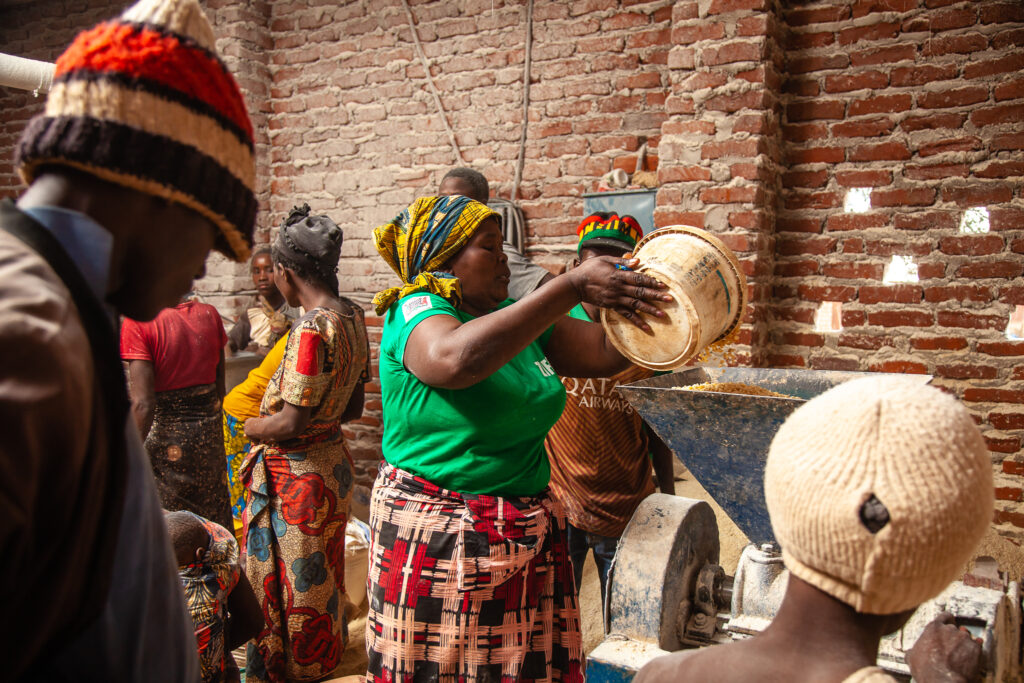
‘Before we would go to the Boma to grind our maize, now we can grind even at 2am and we don’t need to travel far” – Headwoman Mikiwe Banda of Zuze Area, Petauke.
In Zambia, work with the rural electric cooperative in Ntatumbila presented different challenges. Through pilot initiatives linked to mini-grid development, the focus has been on establishing a shared, solar-powered agro-processing hub to anchor demand and support small businesses. While community interest is strong, affordability and distrust were major barriers, especially due to upfront payment requirements that generated skepticism toward equipment providers. To address this, four milling entrepreneurs were offered zero-cost lease agreements, paired with rigorous data tracking. Early results suggest a 38% margin based on energy costs savings, compared to former diesel-powered mills. Operators also report reduced noise, pollution, maintenance needs, and safety risks. Revenue and metering data are now being cross-checked to build a robust business case.
Comparing these experiences reveals two clear lessons: agro-processing hubs can scale when risk is shared and performance is transparent, and revolving finance can lower adoption barriers when paired with strong technical support. These insights are now informing upcoming initiatives in Haiti, where anchored productive loads, blended finance, capacity building and community ownership will be integrated, so electrification empowers sustainable and resilience livelihoods.