Climate action takes hold where people lead: Lessons from Mozambique’s emerging green transition
In northern Mozambique, the green transition is not arriving as a technological package. It is taking shape through people, institutions, and local economies.
Under the CIRCOSOL initiative—funded by AICS and implemented by LVIA, Politecnico di Milano, and Engreen—climate action is unfolding as a process of empowerment.
Its scale is already visible: 15 solar-powered irrigation systems, 4 productive-use solar systems, and improved irrigation for 450 producers. More than 6,000 solar home systems are being deployed through women-led distribution and results-based financing. 225 youth and entrepreneurs have been trained, alongside 120 women becoming active participants in the solar economy. These figures are not tied to infrastructure—they are tied to capability.
One of the most profound shifts is happening inside district institutions. Instead of receiving externally defined plans, local authorities are learning to map vulnerabilities, understand renewable energy regulations, and integrate climate resilience into territorial planning.
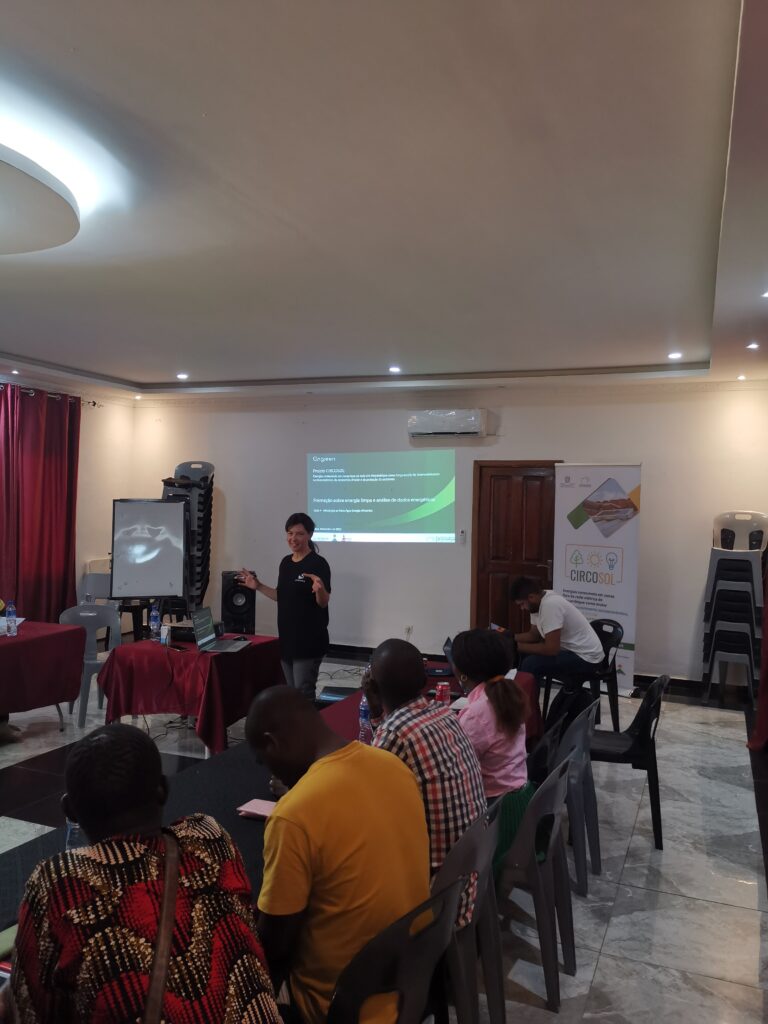
Workshops and coaching—delivered with Engreen’s technical support—are transforming municipal teams from passive implementers into active planners. A solar system may power a building, but an institution that understands energy becomes capable of shaping its entire development path.
Clean energy becomes truly transformative when tied to economic life.
Farmers using solar irrigation can protect their crops from climate volatility and plan their seasons. Agro-processors, equipped with reliable off-grid systems, can mill, dry, refrigerate, and store produce without interruption—preserving quality and reducing losses that once weakened local markets.
Fishing communities face similar constraints. Without cold storage or ice, fishermen must sell quickly at falling prices. Solar-powered freezers and ice machines reverse this dynamic, allowing them to preserve catch for days, access distant markets, and negotiate fairer prices. Energy becomes not just a utility, but a source of economic dignity and bargaining power.
Environmental labs in schools, community campaigns, youth initiatives, and gender-focused activities are building a culture of participation. People begin to see themselves not as beneficiaries, but as actors in the transition. Agency—more than awareness—is what sustains climate resilience over time.
CIRCOSOL demonstrates that the energy transition succeeds when communities see themselves as its authors. Engreen’s work in Mozambique is proving that climate action becomes real when it is local, capable, and collective.