
Building the next phase of renewable electrification
Continued reliance on fossil fuels, particularly diesel generation, is exposing many countries to volatile prices that are again driving up costs and placing growing pressure on public finances. In markets such as Nigeria, where diesel generation represents about 40 GW of installed capacity (Gov. of Nigeria), these inefficiencies are hugely unsustainable and reinforce the case for a faster transition.
Countries and regions need a fresh approach and fully make the switch to a renewables-based electrification plan to power people, business and economies. In addition to homegrown energy security and resilience, renewable electrification across the board generates fresh opportunities for DRE and particularly companies working on mini grids, C&I projects and grid-connected projects. All of which must work in tandem to deliver reliable, clean and cost-effective power for economic growth.
As ever, public finance for first-time energy access, including USD 1.8 billion in international flows in 2023 and USD 1.9 billion from African governments in 2025, remains essential but insufficient. Private investment, at just USD 640 million in 2023 (IEA), further highlights the finance gap. This situation highlights the continued need for flagship initiatives such as EU Global Gateway and Mission 300 to crowd in private capital, and for reinvigorated consultation and collaboration through platforms such as ARE’s Energy Access Investment Forum (EAIF) bringing together the global investment community for energy access.
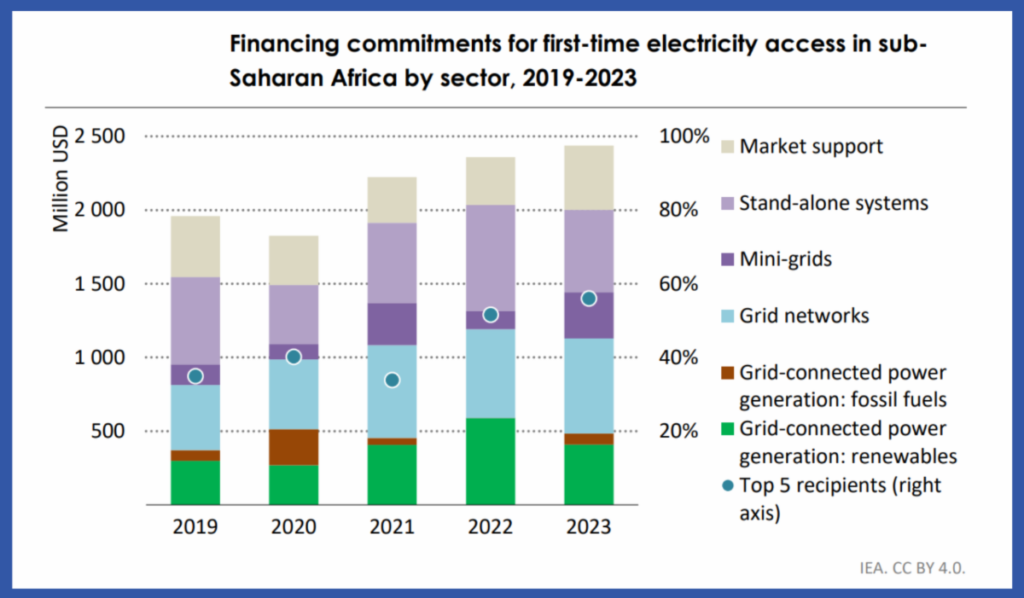
(IEA 2025, Financing Electricity Access in Africa)
For over a decade, EAIF has played a central role in bridging this gap. Since 2014, it has established itself as the leading private sector event where deals are initiated, partnerships are formed, business gets done and capital is mobilised. This year, EAIF 2026 brought together more than 800 delegates, of which 200+ private and public investors, hundreds of companies and key public and CSO actors in Nairobi, generating 1000+ structured B2B meetings and enabling a level of engagement and deal making on a whole new scale.
The Forum has evolved far beyond its original role as a meeting point for the energy access sector, investors, and companies. It now functions as a fully-fledged ecosystem platform, where the sector itself through companies and strategic partners actively shapes the agenda through workshops, dedicated side sessions and business events, while also leveraging the Forum to announce major commitments.
This year underscored that shift. The European Union Global Gateway joined as co-host, reinforcing its role as a key partner for Africa, with plans to mobilise €150 billion across the continent. The Mission 300 also featured prominently, with about USD 40 billion committed towards electrifying 300 million people.
Further announcements included COMESA launching a USD 25 million ASCENT Project Preparation Facility, alongside a GBP 14 million contribution from the FCDO to the Sustainable Energy Fund for Africa as well as several business and M&A deals.
Building on its traditional energy access track record of 20 years, ARE added for the first time key sessions both on grid-based electrification as well as a C&I day, to explore opportunities in new markets and connect stakeholders from across the board to foster a systemic approach.
One of the strongest messages from this year’s Forum is that solutions are proven, business models are maturing, and demand is growing. The priority now is execution. This means faster capital deployment, stronger coordination between actors, and pragmatic approaches to risk sharing.
The ARE Financier Circle recently reinforced this direction in its White Paper on results-based financing for sustainable mini-grids. The conclusion is clear: well-designed RBF mechanisms can accelerate deployment while ensuring accountability and measurable impact. What is needed now is wider adoption and scaling of these instruments.
On the receiving end of investment flows, SMEs sit at the centre of delivery. On the third day of the Forum, ARE launched the first training of its francophone Investment Academy, funded by Camco’s REPP 2 TAF, to strengthen the growth and investment readiness of renewable electrification companies across francophone Africa.
Finally, looking forward, I encourage all stakeholders to already express their interest early for the next edition.
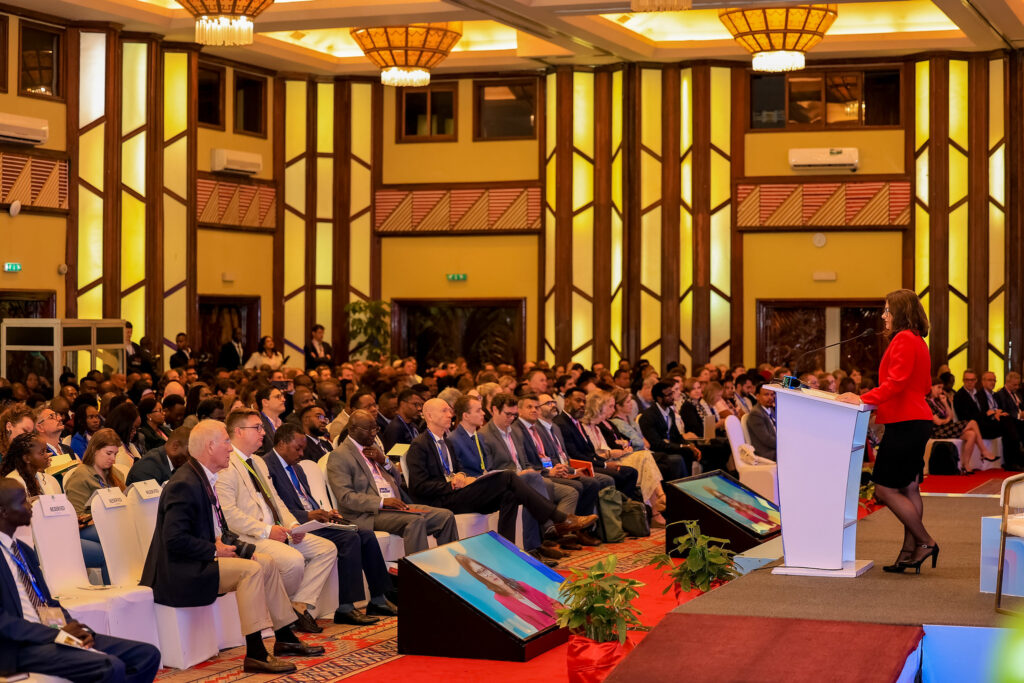
(EAIF 2026 | Nairobi, 21-24 April)
Growing our mandate to match the market: A new chapter for ARE
This year marks a defining moment for our organisation. ARE continues as ARE, with a refreshed meaning and scope. As we celebrate 20 years of impact, the Alliance for Rural Electrification becomes the Alliance for Renewable Electrification. This is not merely a change of name, but a clear reflection of and direction for a sector that has transformed at pace.
We will continue to champion energy access, rural electrification and productive use with the renewed and reinvigorated commitment and ambition. At the same time, we are expanding our scope to include electrification of C&I energy buyers, as well as integrated grid and utility scale renewable projects. Our mission is to federate and support the renewable energy industry and its partners in delivering private-sector led electrification solutions.
The challenge is immense, but so is the opportunity. The tools, the capital, and the expertise exist. What is required now is alignment, ambition, and above all, execution and delivery.
We invite you to be part of this next chapter. Join ARE’s member network, which represents a combined EUR 58 billion in turnover, if you are an industry player. Recommend ARE to your business partners. If you are a company or industrial user of electricity, contact us to join our affiliate group. And for public sector and philanthropy partners, boost your engagement with ARE to deliver public-private partnership programmes and deliver impactful programmes at scale.
The time for abstract concepts has passed. The time for execution is now.
Contact us at hello@renewelec.org to start your journey with ARE.