
How off-grid solutions drive women’s economic empowerment in Burundi
In Burundi, women are increasingly taking a central role in the expansion of off-grid energy solutions – an evolution strongly supported by FESEC Burundi (Fonds Energie Solaire et de Cuisson) – a fund that supports private sector players in energy sector in Burundi, managed by Bamboo Capital Partners with financing from the World Bank and the Government of Burundi under Soleil NYAKIRIZA Project. The fund was officially launched in 2023 and the first contracts were signed in 2024 with 22 companies active in distribution of off-grid solar products.
Today, 7 out of the 22 enterprises supported by FESEC, more than 30% of beneficiaries, are led or majority-owned by women, a remarkable indicator of the growing female leadership in the energy sector. These women-led companies are catalysing clean energy adoption, opening new distribution channels, and reshaping rural markets where access to electricity remains limited.
As energy access improves across the country, women are not only beneficiaries but also key drivers of this transformation. Through FESEC beneficiaries’ extensive grassroots networks, the fund has partnered with 494 women’s groups and cooperatives, representing more than 6,625 women members, who now serve as authorised distributors of off-grid solar products. Many of these groups operate within Village Savings and Loans Associations (VSLAs), using their collective influence to bring affordable energy solutions — such as solar home system (SHS) kits — to remote communities while earning stable and decent income. As of September 2025 women-led enterprises sold more than 16,000 solar products (in less than a year), contributing to 30% of overall sales recorded by FESEC beneficiaries.
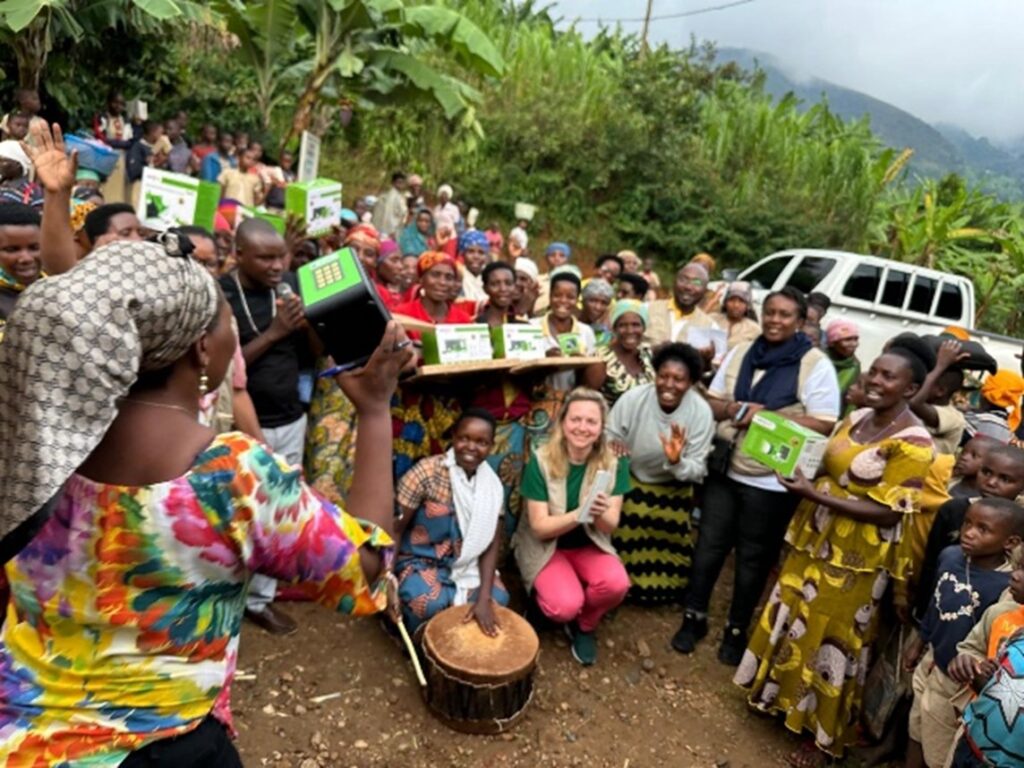
This income-generation opportunity is particularly transformative. By selling solar home systems, women are significantly increasing their financial independence and strengthening the economic resilience of their households. The impact extends beyond economic gains: SHS provide clean lighting that supports social development within families. Children —including girls — are now able to study in the evenings, compensating for the daytime hours often spent on household chores. As a result, solar energy is not only closing the energy gap but also contributing to improved educational outcomes for young girls in rural areas.
To enhance women’s participation and performance in the sector, FESEC delivers tailored technical, managerial, and financial training, equipping them with skills in sales management, customer service, after-sales support, and basic solar technology maintenance. This capacity building is turning women into confident and capable energy entrepreneurs who can thrive in both rural and peri-urban markets.
To date, FESEC has allocated USD 1.86 million in grants to seven women-led enterprises, supporting the procurement and distribution of solar kits. This financial boost is driving business growth, creating jobs, and accelerating the spread of clean energy to underserved regions. FESEC is also financing clean cooking solutions, which have significant positive impacts on women’s health, and supporting other innovative business models such as productive uses of solar energy, Energy-as-a-Service (EaaS), and electric cooking.
FESEC’s approach reflects a strong commitment to gender equality, inclusive entrepreneurship, and green economic transformation in Burundi. Empowering women in the off-grid energy sector is not only a question of fairness — it is a powerful strategy for advancing universal energy access and building a more sustainable future for all.
As a financier, you can join us in this effort and help enable the electrification of 100,000 Burundian households in next 2 years and provide much-needed support to women-led companies.